Reliable Water Pressure Testing & Diagnosis
Need water pressure testing? Quick Fix Plumbers 24/7 connects customers with available local plumbing professionals for low or high pressure, regulator concerns, and plumbing diagnosis.
Call +1 (619) 714-2525Call 24/7 to discuss water pressure testing for low, high, or fluctuating pressure.
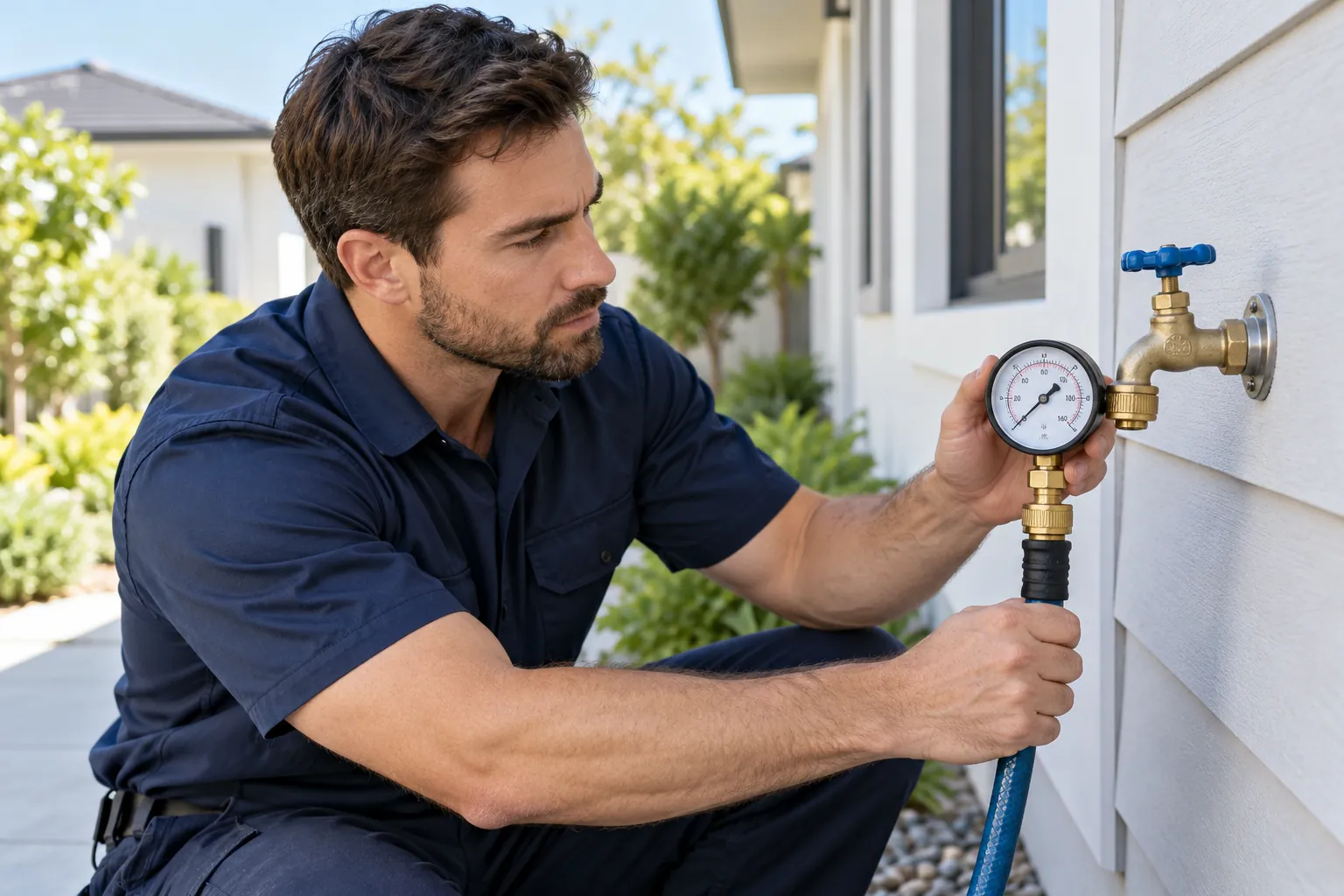
Water Pressure Testing, Adjustment & Home Plumbing Diagnosis
Low or fluctuating water pressure can affect showers, faucets, and appliances. Excessive pressure may place added stress on plumbing pipes, fixtures, and equipment. Quick Fix Plumbers 24/7 is a referral and dispatch service that connects customers with independent local plumbing professionals for water pressure testing and diagnosis where available.
A professional can measure pressure at appropriate points in your system, ask when and where the pressure changes, and investigate possible causes. Depending on the findings, the issue may involve a pressure regulator, partially closed valve, buildup, a leak, municipal supply, well pump, or pressure tank.
Pressure targets depend on the home, fixtures, water source, and local requirements. EPA WaterSense says fixtures generally operate best with incoming service pressure between 45 and 60 PSI; local code and system conditions still guide any adjustment. A professional can test the home and explain a suitable next step.
Water Pressure Testing for Common Plumbing Issues
Call to discuss changes in water pressure at your home or property. Water pressure testing can help distinguish a whole-house supply concern from a fixture or plumbing-system issue.
Our Water Pressure Testing Process
Measure the pressure, identify possible causes, and discuss repair or adjustment options for your home.
Pressure Testing
The professional measures static pressure and, when useful, compares readings at appropriate points in the plumbing system.
Problem Diagnosis
The professional reviews the readings and investigates possible causes such as a valve, leak, regulator, mineral buildup, or supply issue.
Solution Options
Recommendations may include regulator adjustment, cleaning, or plumbing repairs.
Pressure Adjustment
Adjustments aim to support suitable pressure for your home’s plumbing and fixtures.
Why Water Pressure Testing Matters for Your Home
Pressure that is too low may point to a supply, valve, leak, pump, or buildup issue. Excessive pressure can stress plumbing pipes, fixtures, and appliances and may increase the risk of leaks. Pressure readings can vary depending on whether water is flowing, the test location, and whether the home uses municipal supply or a well. Water pressure testing helps a professional interpret those readings, inspect a pressure regulator or well equipment, and consider applicable local requirements.
How a Home Water Pressure Test Helps Find the Cause
A water pressure test is more useful when the symptoms and test conditions are recorded. A plumber may take a static reading with water fixtures off, then compare it with a flowing reading if the pressure changes when faucets, showers, or appliances run. The comparison can help determine whether the concern is related to the incoming supply, a pressure-reducing valve, a partially closed shutoff, a restriction, or a leak.
EPA WaterSense describes using a pressure gauge at a hose bibb to check incoming service pressure with water-using fixtures turned off. Its home maintenance guide gives basic instructions and discusses a 45–60 PSI range where fixtures generally operate best. For additional technical context, see the EPA’s WaterSense service pressure technical sheet, which discusses pressure-regulating valves and system checks. These are general references, not a substitute for local plumbing code or an on-site diagnosis.
Low pressure, high pressure, and changing readings
Low pressure at one faucet may have a different cause than weak flow throughout the property. A clogged aerator or fixture shutoff can affect one outlet, while a whole-home pressure drop may call for checking the main valve, regulator, supply, well pump, pressure tank, or a possible leak. If pressure changes only when several fixtures run, the professional may evaluate flow and system capacity as well as static pressure.
High pressure can stress plumbing components and may contribute to leaks or premature fixture wear. Do not adjust a pressure-reducing valve just to chase a number: the device, thermal expansion protection, water heater, and local requirements may all matter. A professional can explain whether adjustment, repair, or replacement is appropriate. For general information about pressure-reducing valves, see the manufacturer’s Watts water pressure reducing valve overview.
What to note before you call
Write down which fixtures are affected, whether the issue is constant or intermittent, when it began, and whether the water source is a city supply or private well. Mention recent plumbing work, visible leaks, unusual pipe noises, or a regulator or pressure tank that has not been checked recently. These details help narrow down what a professional may need to inspect.
Quick Fix Plumbers 24/7 answers calls around the clock and checks for a local plumbing professional based on your ZIP code and partner availability. We are a referral and dispatch service; the independent professional confirms the diagnosis, scope, pricing, schedule, licensing where applicable, and proposed repairs directly with you before work begins.
Water Pressure Testing FAQs
Have questions about low pressure, high pressure, or water pressure testing? Call to discuss your system.
Call +1 (619) 714-2525 →What is normal residential water pressure?
EPA WaterSense says fixtures generally operate best when incoming service pressure is between 45 and 60 PSI. The suitable pressure for a specific home depends on its plumbing, fixtures, water source, and local requirements. Many U.S. plumbing codes require pressure regulation when static pressure exceeds 80 PSI; a professional should confirm applicable local rules.
Why is my water pressure suddenly low?
A sudden pressure drop may relate to a supply issue, valve, pipe leak, or municipal service interruption. A gradual change may be associated with buildup, a regulator, or well equipment. Water pressure testing can establish readings and help a professional investigate the likely cause.
Can high water pressure damage my plumbing?
Excessive pressure can stress pipes, fixtures, and appliances and may increase the risk of leaks. Many plumbing codes require pressure regulation when static pressure exceeds 80 PSI, but requirements vary by jurisdiction. A professional can measure your system and discuss a suitable solution.
How can I improve low water pressure?
The right solution depends on the cause. Options may include cleaning aerators, adjusting a pressure regulator, repairing a leak, or installing a pressure booster pump. A pressure test can help identify the appropriate next step.
Need Water Pressure Testing?
Call Quick Fix Plumbers 24/7 to discuss weak water flow, pressure fluctuations, or a pressure regulator concern.
Call +1 (619) 714-252524/7 call answering · Ask about local availability