Reliable Water Softener Repair & Installation
Need water softener repair or installation? Quick Fix Plumbers 24/7 connects customers with available local plumbing professionals for hard-water concerns, system evaluation, and service options.
Call +1 (619) 714-2525Call 24/7 to discuss water softener repair, installation, or hard water concerns.
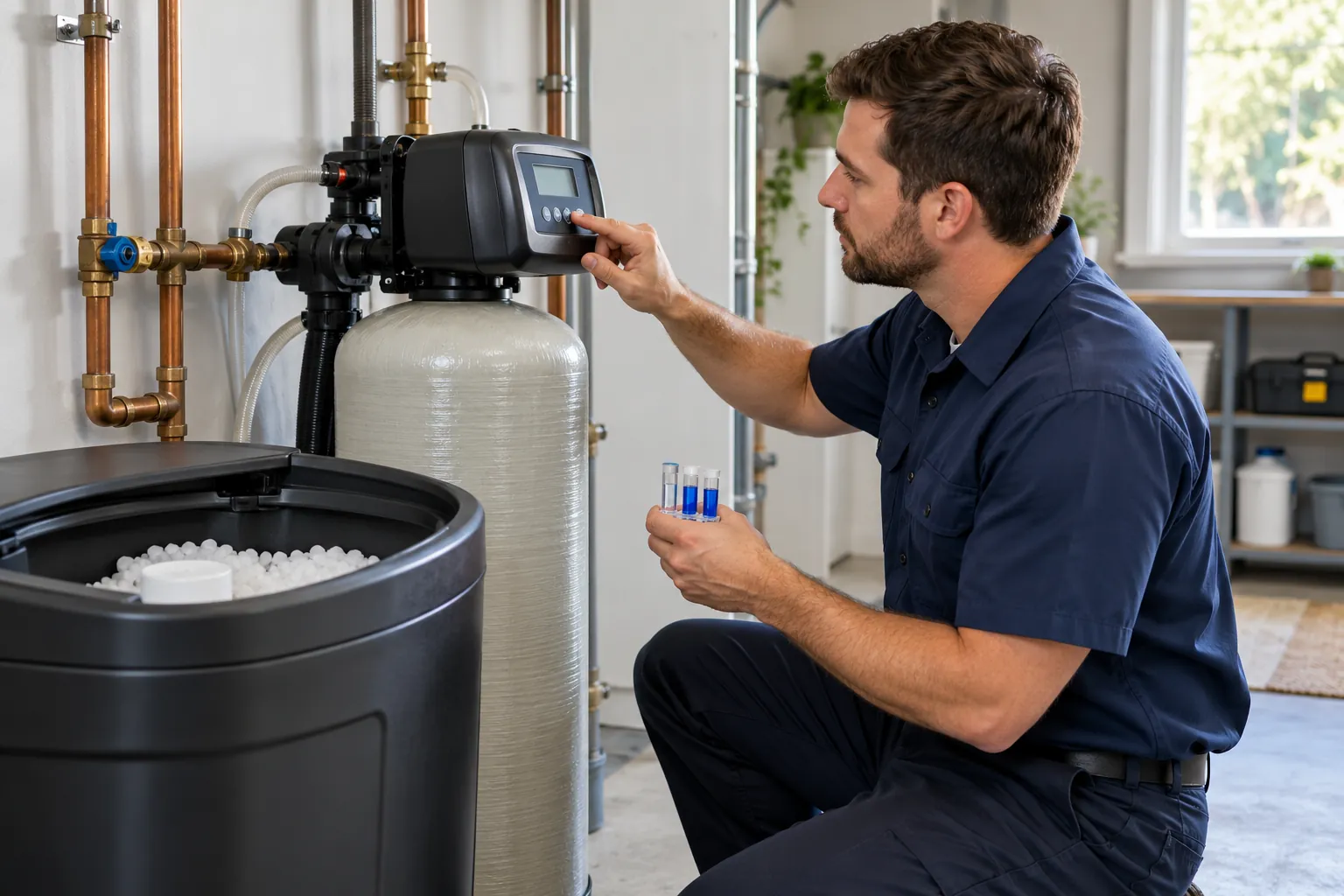
Water Softener Repair and Installation for Hard Water Problems
Hard water contains dissolved minerals, mainly calcium and magnesium. Mineral scale can collect on fixtures and appliances, while spots on dishes and soap residue may be signs of hardness. Quick Fix Plumbers 24/7 is a referral and dispatch service connecting customers with independent local professionals for water softener repair, installation, and hardness evaluation where available.
If a water softener is not working as expected, a professional can assess the unit, review its settings, and discuss repair options. For a new water softener installation, a measured hardness level and household water-use estimate can help guide system capacity and settings. Ask whether other minerals, such as iron, also need to be considered for your water source.
System sizing, salt use, regeneration settings, and maintenance all affect performance. Ask how often to check the salt tank, which salt type the manufacturer recommends, and what maintenance schedule fits your household. A softener can reduce hardness minerals, but it does not remove every possible contaminant or replace appropriate drinking-water testing.
Water Softener Repair for Common Hard Water Problems
Call to discuss hard water signs, softener performance, or a new installation. The right water softener repair depends on the system, its settings, and a water test.
Our Water Softener Repair and Installation Process
Understand your water hardness, system options, and maintenance needs.
Water Evaluation
Professional testing helps determine your water hardness level and possible solutions.
System Recommendation
Based on water quality and household usage, you’ll receive system recommendations.
Professional Installation
Installation includes appropriate system sizing and settings for your household.
Operation Guidance
Learn how to maintain the system and support its ongoing operation.
What to Discuss Before Water Softener Installation
Ask about your measured water hardness, system capacity, regeneration settings, salt use, and maintenance needs. If your household has a sodium-restricted diet, ask how the softener may affect drinking water and whether a separate unsoftened tap or another option is appropriate. A water softener reduces hardness minerals; it does not identify every water quality issue. Before water softener repair or installation, ask which concerns a hardness test can answer and whether separate water testing is appropriate.
How Water Softener Repair and Installation Are Evaluated
Water hardness is related mainly to dissolved calcium and magnesium. These minerals can react with soap, leave spots or residue, and create scale inside water-using equipment. The U.S. Geological Survey explains the causes and common effects in its Hardness of Water guide. Local water conditions vary, so a national or regional map cannot replace a test of water at your property.
A water hardness test gives a professional a starting point for discussing treatment. The professional may also ask about the number of people in the home, daily water use, plumbing layout, and whether the property uses municipal water or a private well. If there are concerns about taste, odor, staining, or other possible contaminants, ask about separate testing; a hardness reading alone does not establish that water is safe or address all water-quality issues.
Common reasons a water softener needs service
A system can appear to stop softening because salt is low, a salt bridge has formed, the settings do not match current household use, the unit needs regeneration, or a component requires inspection. A professional can check the brine tank, control settings, water flow, and installation according to the equipment instructions. Avoid forcing stuck parts or changing unfamiliar settings before you understand how the system operates.
Water softener repair may be appropriate when a serviceable component or setting is the issue. If a system is undersized, repeatedly malfunctioning, or near the end of its useful life, replacement may be discussed. Ask the professional to explain what was tested, what the proposed work includes, whether plumbing changes are needed, and what the estimate covers before approving service.
Choosing a system and planning maintenance
Capacity should be based on measured hardness and household water demand, not just the number of bathrooms. Ask how the system calculates regeneration, how much salt it may use under your conditions, and what routine checks you can perform. Regeneration needs vary by equipment and water use, so follow the manufacturer's manual rather than relying on a fixed schedule from another home.
Ion-exchange softeners exchange hardness ions for other ions, commonly sodium. The U.S. EPA’s overview of drinking-water treatment technologies describes cation exchange. If you have a sodium-restricted diet or want untreated water for drinking and cooking, discuss a separate tap or bypass arrangement with a qualified professional and your healthcare provider as appropriate.
For an additional explanation of how ion-exchange systems work, see the USGS answer on hard water, soft water, and water softeners. These references can help you prepare questions; a local professional should assess your specific equipment and water conditions.
What to prepare before scheduling
When requesting water softener repair or installation, note the system brand and model if visible, the symptoms, when they began, and any recent changes to salt or settings. Share a recent water test if you have one. This helps the professional understand the request and discuss whether inspection, maintenance, repair, or replacement may be a suitable next step.
Quick Fix Plumbers 24/7 answers calls around the clock and checks whether a local independent professional is available in your ZIP code. Availability varies by location. The matched professional confirms the diagnosis, scope, price, schedule, and any applicable licensing directly with you before work begins.
Water Softener FAQs
Have questions about hard water, softener repair, or installation? Call to discuss your home’s water.
Call +1 (619) 714-2525 →How do I know if I have hard water?
Common signs include white scale buildup on faucets and fixtures, spots on dishes, dry-feeling skin or hair after bathing, and reduced soap lathering. A water hardness test can help confirm the mineral level.
How long do water softeners last?
Many quality water softeners last around 10–15 years with proper maintenance. Lifespan depends on the system, water conditions, and use. Regular salt replenishment and occasional professional servicing may help maintain performance.
Is softened water safe to drink?
Ion-exchange softeners replace some calcium and magnesium with sodium, so softened water may contain more sodium. If you follow a sodium-restricted diet or have concerns about drinking water, ask your healthcare professional and water treatment professional about suitable options, such as a separate drinking water tap that bypasses the softener.
How often do I need to add salt to my water softener?
Salt use depends on household water usage and water hardness. Many households add salt every 4–8 weeks, but check the tank monthly and follow the system manufacturer’s guidance.
Need Water Softener Repair or Installation?
Call Quick Fix Plumbers 24/7 to discuss hard water, water hardness testing, or a water softener that needs service.
Call +1 (619) 714-252524/7 call answering · Ask about local availability